Introducing the Eco-Systemic Flourishing (ESF) Framework

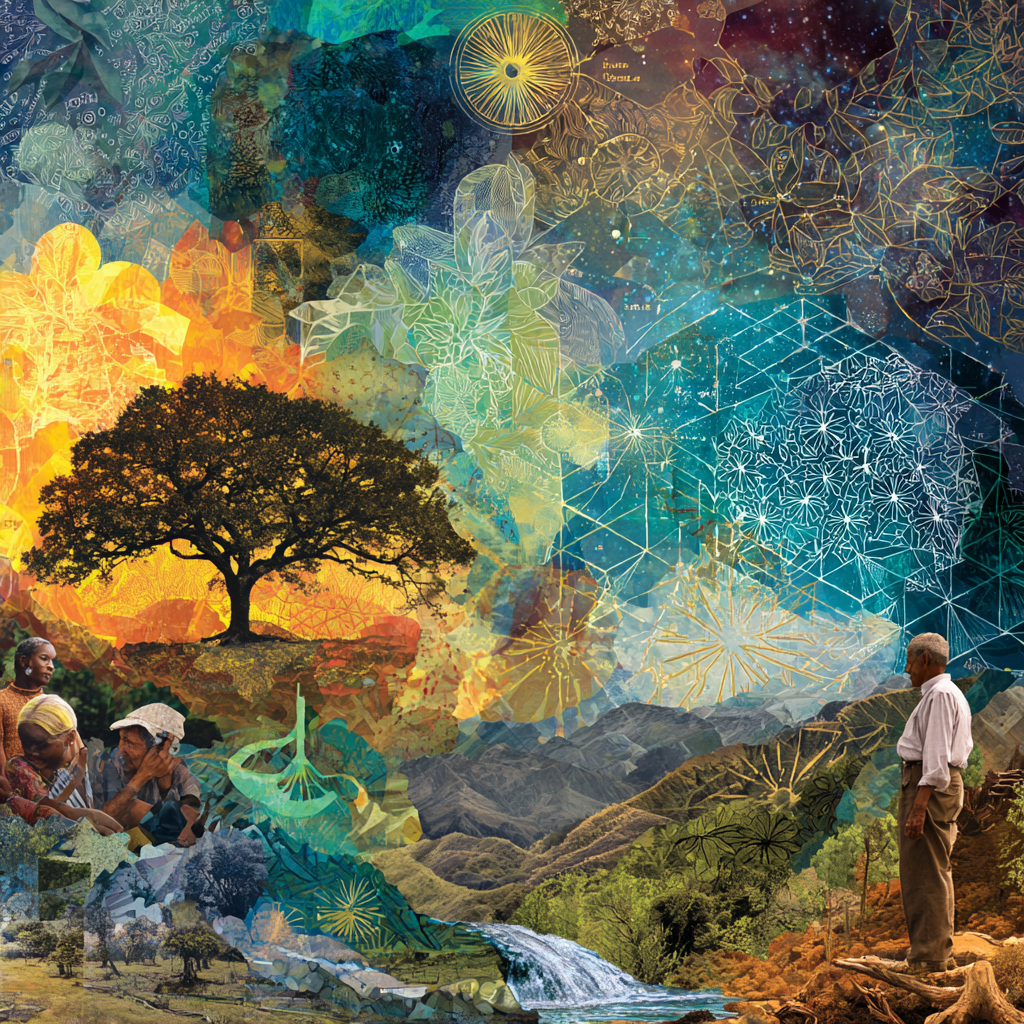
The Eco-Systemic Flourishing (ESF) Framework is a new way of understanding what helps people, communities, and the planet to thrive. It recognises that wellbeing is never an isolated achievement but something that emerges from the relationships that connect individuals, culture, economy, and the natural world. ESF highlights that many of today’s challenges - climate breakdown, social fragmentation, and declining trust—stem from deeper systemic imbalances and from development models that do not reflect what truly matters to people across generations.

ESF offers a simple, integrated structure for thinking and acting differently. It brings together four interconnected domains that shape every community and organisation:

Natural Environment

Circular & Regenerative Economics

The material conditions that support livelihoods while restoring rather than depleting the natural world.

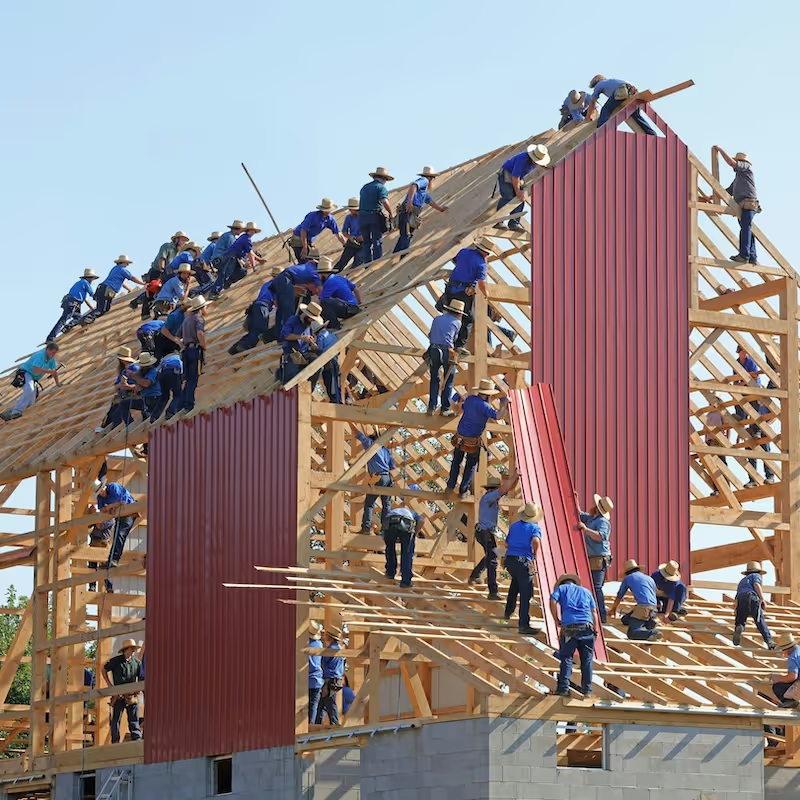
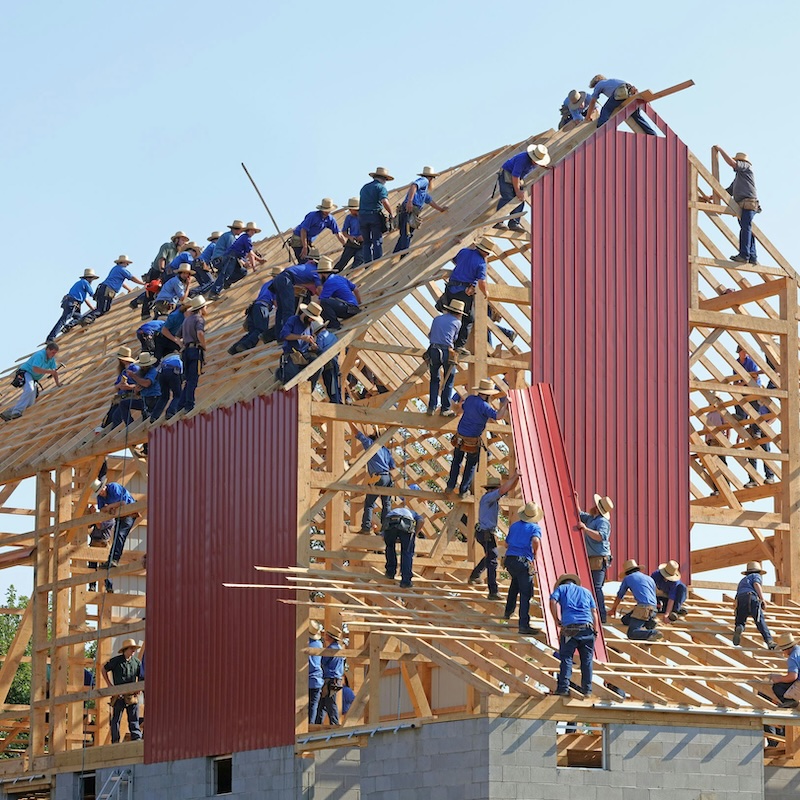
Cultural Values & Identity
Human Capacities & Potential

At the heart of the framework sits a developmental model of seven universal human needs that shape wellbeing across the lifespan: security, relationship, independence, engagement, fulfilment, contribution, and growth. These needs are formed most powerfully in the early years and continue to influence how individuals connect with others and the wider world throughout life.

By weaving these four domains and seven needs into a coherent whole, ESF provides a practical compass for designing policies, community initiatives, educational approaches, and economic models that nurture long term flourishing. It supports decision makers to look beyond isolated indicators and instead consider whether systems genuinely strengthen relationships, restore ecosystems, express shared values, and enable people to grow in meaningful ways.

ESF is both a framework and an invitation: to reimagine progress through a relational, developmental, and intergenerational lens, and to help create communities and institutions that support the wellbeing of all life.

Pattern Recognition

ESF encourages users to identify patterns of coherence and incoherence—within individuals, communities, and ecosystems—based on relational health, developmental stage, and value alignment.

Multi-Level Mapping

It supports reflection at multiple scales (personal, societal, ecological) and across time (including intergenerational implications).

Sensemaking Tool

By integrating insights from developmental psychology, systems theory, Indigenous wisdom, and regenerative design, it helps users interpret challenges and opportunities within a broader, life-centred worldview.
Resources

Open Resources for Change

Powerpoint
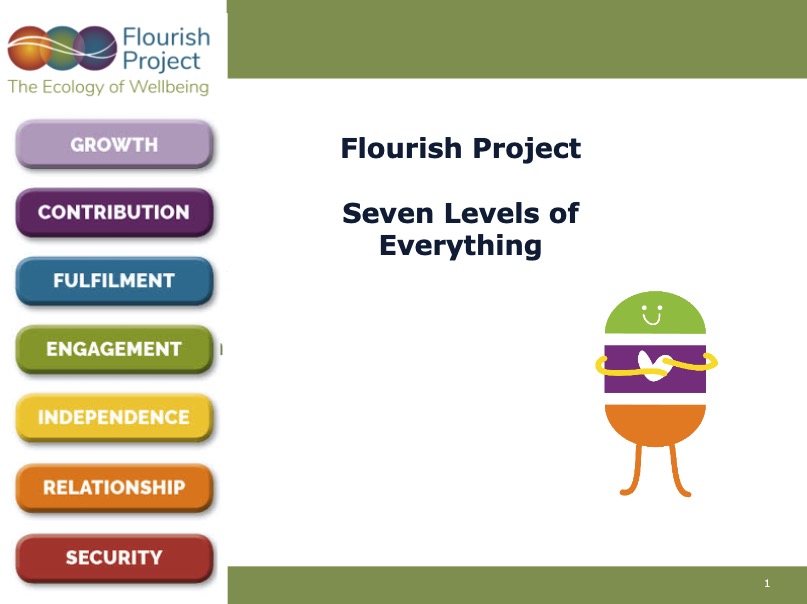
Seven Levels of Everything
The document outlines the Flourish Project's 'Seven Levels of Everything' model, a holistic framework for wellbeing applicable to individuals, communities, schools, and care settings. The seven levels—Growth, Contribution, Fulfilment, Engagement, Independence, Relationship, and Security—are each explored through reflective questions and linked to practical needs and resources for different groups. The model emphasizes human rights, personal and community development, emotional and physical health, and environmental sustainability. It connects to international wellbeing measures, educational competencies, and care frameworks, highlighting values such as empathy, resilience, creativity, inclusiveness, and safety. The document also provides examples of community resources, wellbeing apps, and care approaches (including Montessori and dementia care) that align with the seven levels, aiming to support holistic flourishing across all life stages and societal levels.
Download Resource
Word Document
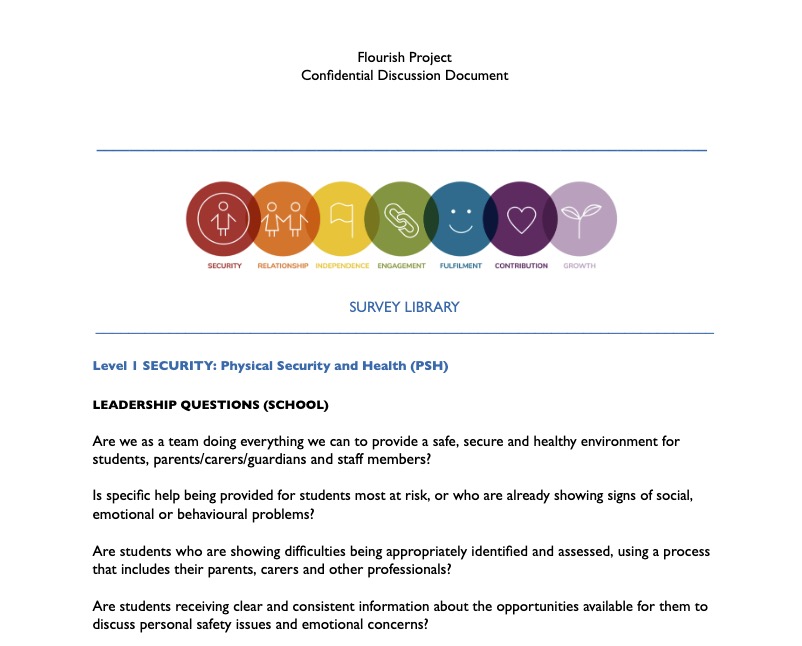
Digital Wellbeing Platform - Survey Library
The document is a survey library for schools aimed at assessing and promoting wellbeing among students, staff, parents/carers/guardians, and leadership. It is organized around seven key themes: Security, Relationship, Independence, Engagement, Fulfilment, Contribution, and Growth. Each theme includes targeted questions for different stakeholders to evaluate experiences and perceptions related to safety, mental health, relationships, self-worth, engagement, fulfilment, participation, and sense of purpose. The purpose is to help schools identify strengths and areas for improvement in wellbeing, fostering a supportive and inclusive environment for the entire school community.
Download Resource
Word Document
The ESF Wellbeing Evaluation Grades
The document describes the Eco-Systemic Flourishing (ESF) Grading System, which assesses wellbeing frameworks based on two main criteria: the depth of human motivation (across seven levels) and the breadth of ecosystemic integration (across four domains: Human Capacities & Potential, Cultural Values & Identity, Natural Environment, and Circular & Regenerative Economics). Frameworks are evaluated on five dimensions—Motivational Depth, Domain Breadth, Relational Integration, Ecological Consciousness, and Transformative Potential—each scored from 0 to 5, for a maximum of 25 points. Grades range from A (fully integrated, eco-systemic) to E (minimal integration). The system is applied to various frameworks, noting that Nova Scotia Community Wellbeing scores highly for participatory and ecological integration, while British Columbia Health Indicators is strong in basic needs but lacks growth and ecological focus. The document emphasizes the value of participatory, adaptive, and ecological approaches for higher ESF grades and suggests Nova Scotia could serve as a global model with further improvements.
Download Resource
Word Document
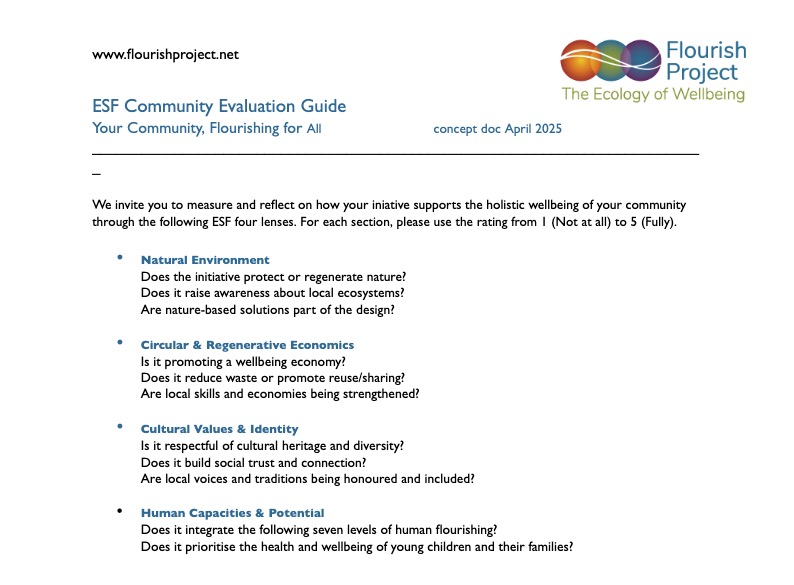
ESF Community Evaluation Guide
The ESF Community Evaluation Guide outlines a framework for assessing community initiatives through four key lenses: Natural Environment (focus on nature protection, ecosystem awareness, and nature-based solutions), Circular & Regenerative Economics (emphasizing wellbeing economies, waste reduction, and support for local skills and economies), Cultural Values & Identity (highlighting heritage, social trust, and inclusion of local voices), and Human Capacities & Potential (covering physical health, emotional safety, agency, meaningful activities, self-expression, participation, and intergenerational learning). The guide recommends rating each area from 1 to 5 to evaluate the initiative's overall impact on holistic community wellbeing.
Download Resource
Cosmos
Nature
Others
Natural Environment
Circular & Regenerative Economics
Human Capacities & Potential
Cultural Values & Identity
GROWTH
Contribution
Fulfilment

Seven Motivations

Security

Relationship

Independence

Engagement

Fulfilment

Contribution

Growth


Natural Environment
Circular & Regenerative Economics
Cultural Values & Identity
Human Capacities & Potential
Self
Others
Nature
Cosmos